Pulehunui Industrial Park  ·  Maui, Hawaiʻi

Mauiʼs Commercial Biochar Platform for Waste Diversion, Soil Health, and Durable Carbon Removal

Maui BioCarbon is developing a 30–35 ton-per-day biochar facility at Pulehunui Industrial Park to convert locally sourced woody biomass and green waste into high-value biochar products for agriculture, land management, environmental use, and carbon removal.

Current Development Status
Site
Pursuing location at Pulehunui Industrial Park
Technology
Rotary drum pyrolysis system selected
Feedstock
Supplier LOIs in place; local woody biomass & green waste
Products
Biochar for agriculture, landscaping, compost blending, environmental use
Financing
SBA 504 / HI-CAP / private capital strategy in process
Partners
LOIs, expressed interest, and active discussions with local agriculture, resort, and land-management partners
30–35
Tons Per Day Biomass Throughput
Pyrolysis
Rotary Drum Technology
Pulehunui
Industrial Park, Maui
4 Streams
Diversified Revenue Model
Our Mission

Turning Maui’s Biomass Challenge into Long-Term Island Value

Our mission is to help Maui transform organic waste into long-term ecological and economic value.

Maui BioCarbon exists to create a local pathway for woody biomass, green waste, and invasive species residues that would otherwise be landfilled, burned, chipped, or left to accumulate.

By converting those materials into biochar, we aim to support healthier soils, more resilient landscapes, local agriculture, landfill diversion, and measurable carbon storage.

We are building this project for Maui — not as an abstract carbon project, but as practical local infrastructure that connects waste management, agriculture, land stewardship, and climate resilience.

Strengthen Maui’s Circular Economy

Convert local biomass into useful local products instead of treating it as waste.

Support Healthier Soils

Produce biochar products that can improve soil structure, water retention, nutrient management, and compost performance.

Reduce Land & Landfill Pressure

Create a productive outlet for woody green waste, agricultural residues, and invasive species biomass.

Advance Durable Carbon Removal

Pursue measurable, standards-based carbon storage where technically and economically defensible.

Why Now

A Local Carbon Platform Built for Maui’s Current Needs

Maui BioCarbon is designed around immediate island constraints: limited disposal capacity, high organic-waste handling costs, wildfire-fuel reduction needs, and growing demand for resilient soils and local circular-economy infrastructure.

Waste Pressure

Woody biomass, green waste, and agricultural residues need productive local outlets that reduce landfill dependence and create value from material already generated on island.

Wildfire Resilience

Invasive and overgrown biomass can be converted into useful carbon products, supporting fuel-load reduction while avoiding open decomposition or unmanaged disposal.

Soil & Water

Biochar can support water retention, nutrient management, and soil resilience across farms, resort landscapes, restoration projects, and compost-blended products.

Financeable Scale

A 30–35 TPD initial facility creates a practical first commercial platform: large enough to matter, small enough to finance, permit, and operate with discipline.

Mauiʼs Challenges

Built Around Real Maui Problems

The project is built around immediate Maui waste, soil, and water challenges, while preserving optionality for future environmental applications as the technology, permits, and markets are validated.

Maui woody biomass and green waste
Waste & Landfill

Tens of Thousands of Tons of Organic Material Each Year

Maui continues to manage a significant stream of green waste, woody biomass, biosolids, and other organic material. Much of this material has historically required landfill, composting, mulching, or other disposal pathways. Maui BioCarbon is focused on creating an additional local outlet for suitable woody biomass and green waste.

Commercial green-waste disposal on Maui currently carries meaningful tipping fees.
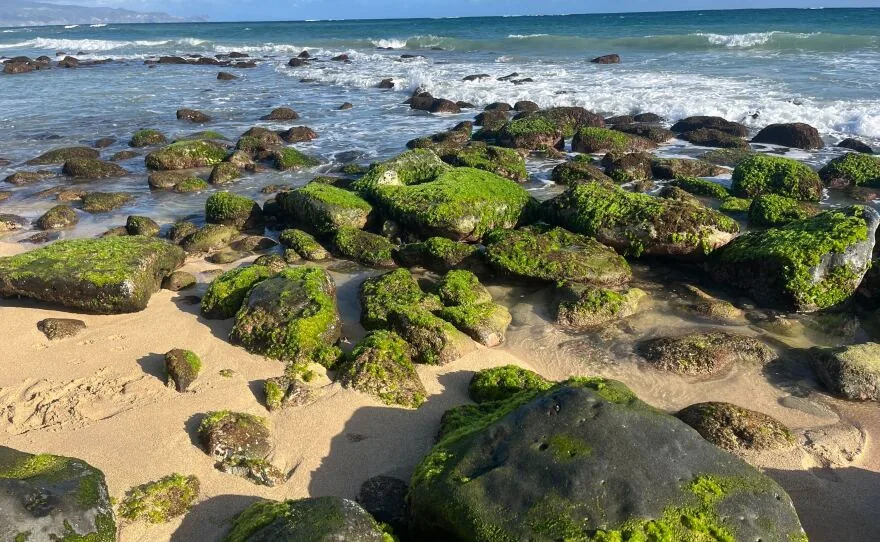
Maui reef
Water & Reef

Nutrient Retention for Healthier Soils and Watersheds

Local monitoring has identified nitrogen enrichment at some Maui coastal sites, with fertilizer and wastewater among the potential nutrient sources. Biochar can help soils retain nutrients and water, reducing nutrient losses from leaching when applied appropriately as part of a broader soil-management strategy.

Biochar can support nutrient retention and soil-water management.
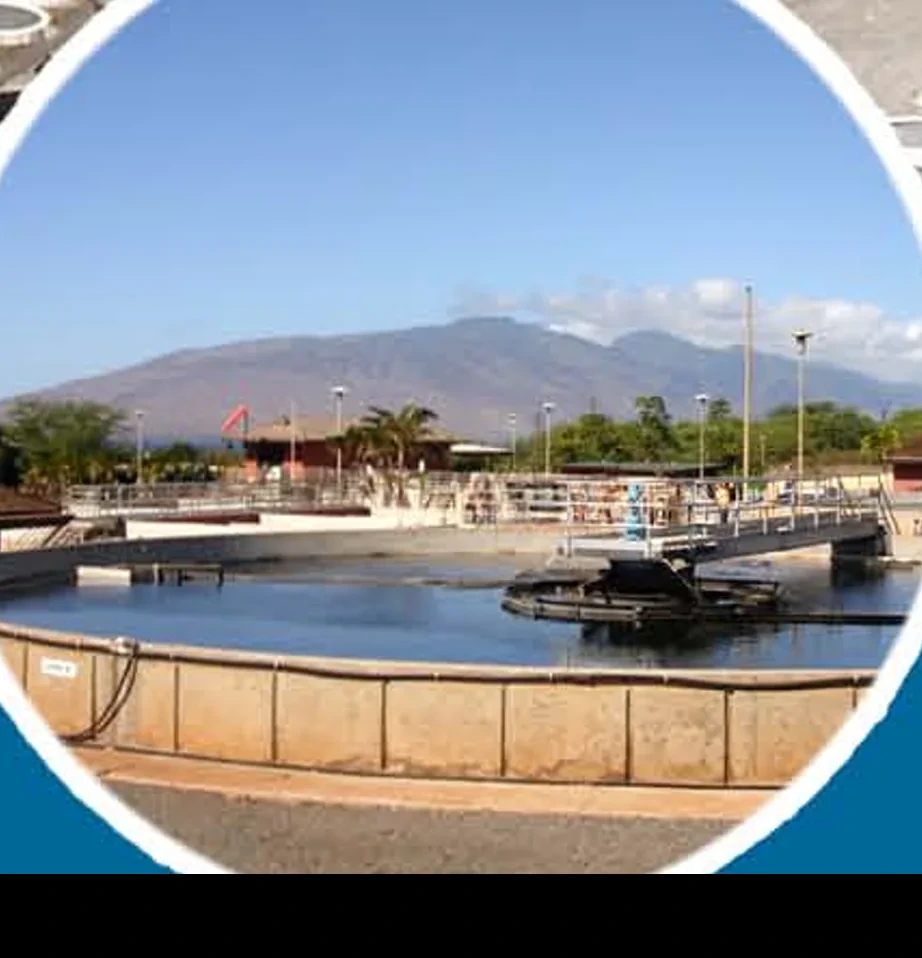
Kihei Wastewater Treatment
Future Applications

Future Environmental Feedstock Potential

Research and regulatory attention are increasing around thermal treatment of certain contaminated organic materials, including biosolids. High-temperature thermal systems may have future applications in this area, but only with appropriate permitting, feedstock qualification, technology validation, emissions controls, and regulatory approval. Maui BioCarbon’s initial project remains focused on locally sourced woody biomass, green waste, and agricultural residues.

Future optionality — not part of the initial operating plan.
Sources & diligence note: Public claims are based on County of Maui solid-waste materials, current Maui green-waste fee information, Maui Nui Marine Resource Council limu monitoring, USDA biochar guidance, and EPA/ITRC PFAS treatment guidance. All project-specific figures remain subject to final engineering, feedstock agreements, permits, and lender diligence.
The Solution

Biochar is the Answer

Maui BioCarbon converts green waste into biochar — a stable form of carbon that enriches soil, reduces erosion, and provides long-term environmental benefits.

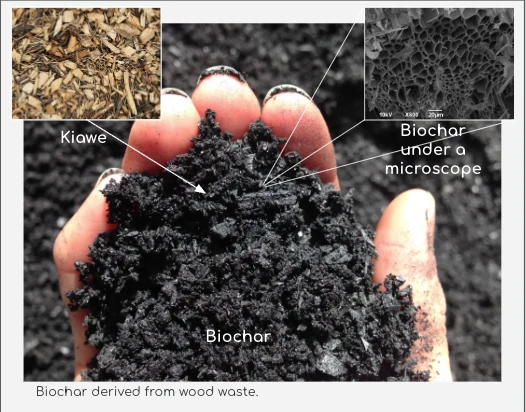
Kiawe biochar from Maui wood waste
Kiawe biochar derived from Maui wood waste — shown with feedstock chips and microscope cross-section

Micro-sponge effect: When properly produced and applied, biochar can support soil water and nutrient retention, improving soil health and reducing irrigation demand.

Root and microbial health: Biochar improves root health, microbial life, and turf resilience across agricultural and landscaping applications.

Durable carbon storage: Biochar can provide long-term carbon storage when produced, characterized, and documented under recognized standards.

Low-emission process: Pyrolysis generates both biochar and syngas for self-powered energy recovery, while reducing wildfire risk through invasive species removal.

Circular economy: Every ton of waste processed generates value — for farmers, for the islandʼs carbon balance, and for Mauiʼs waste infrastructure.

The Pyrolysis Process

Carbon Without Combustion

Pyrolysis heats organic waste in a low-oxygen environment so it does not burn. The result is a stable carbon-rich material, with emissions performance dependent on system design, operating conditions, and controls.

🌿
Feedstock
Intake
Sorting &
Sizing
🌡
Pyrolysis
400–700℃
Syngas
Recovery
Biochar
Cooling
🌻
Screen &
Blend
📦
Bag / Bulk
Sales
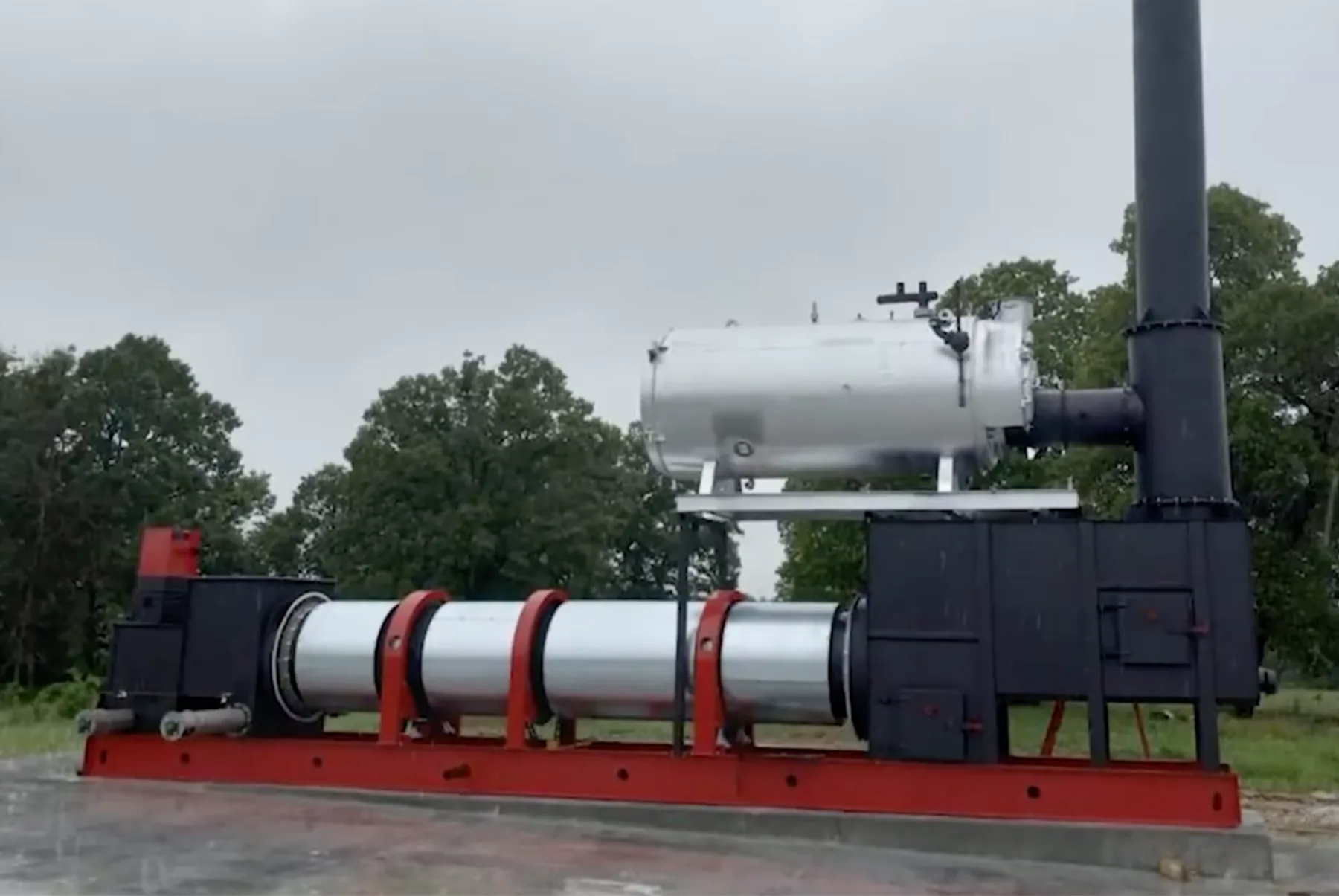
30 TPD Rotary Pyrolysis Drum
30 Ton Per Day Rotary Pyrolysis Drum
1
Low-Oxygen Thermal Conversion

Biomass heated to ~400–700℃ in an oxygen-limited chamber. Organic material thermally decomposes — no burning, no incineration.

2
Product Separation

Biochar (solid carbon) is the primary product. Syngas is captured and reused to provide renewable process heat, reducing external energy demand.

3
Energy Recovery & Emissions Control

Syngas is reused within the process to reduce external energy purchases, improve operating resilience, and support a more efficient thermal system. Enclosed process with emissions controls throughout.

Local Feedstock Strategy

Built on Mauiʼs Biomass Reality

Feedstock is generated from agricultural operations and invasive species removal activities — not associated with conversion of forestland. Supplier LOIs are in place.

Feedstock = Revenue: Commercial green-waste disposal on Maui carries meaningful tipping fees. Maui BioCarbon can provide a productive local pathway for suitable biomass while creating useful biochar products for agriculture, landscaping, and land management.
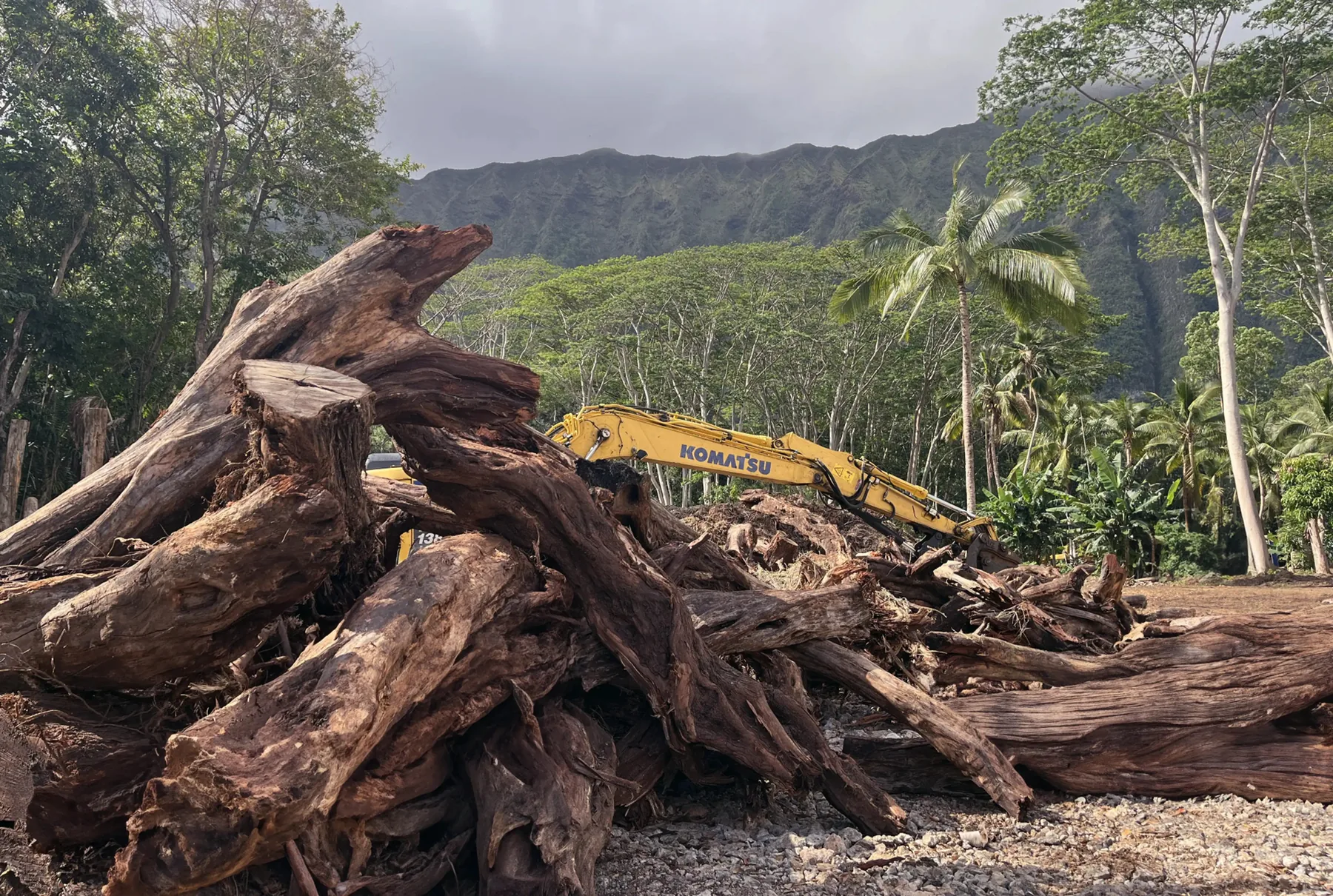
Kiawe removal on Maui
Kiawe (mesquite) removal on Maui — invasive and overgrown biomass feedstock
Invasive Species

Kiawe (Mesquite)

Fast-growing, frequently cut back, high-carbon-density woody biomass — a strong pyrolysis feedstock with limited or negative economic value in current disposal markets.

Invasive Species

Black Wattle

Fast-growing invasive contributing to wildfire risk. Biomass conversion creates a productive removal pathway that reduces fuel load and ecological impact.

Agricultural

Agricultural Green Waste

Crop residues, orchard trimmings, and farm biomass including pineapple agricultural byproducts from Maui Gold and other diversified farm operations.

Landscaping

Landscaping Debris

Commercial and resort landscaping material from Mauiʼs hospitality sector, diverted from landfill through partner relationships including BrightView.

Land Management

Land Management Residues

Carefully sourced woody material from invasive species management programs. Not associated with conversion of native habitat or forestland.

LOIs in Place

Supplier LOIs Secured

Letters of intent in place with local feedstock suppliers across agricultural operators, landscapers, county programs, and land managers.

“Every ton of waste we process generates value — for farmers and for the islandʼs carbon balance.”
Business Model & Revenue

Multiple Revenue Streams from a Single Feedstock

A diversified set of revenue streams creates income and offsets costs — making the project resilient across market conditions.

Revenue StreamRole in ModelNotes
Biochar Product SalesPrimary RevenueBulk and blended biochar products for agriculture, landscaping, environmental, and soil-improvement applications.
Feedstock Diversion FeesFeedstock MonetizationPotential intake revenue from providing a productive local pathway for woody biomass, green waste, and agricultural residues.
Renewable Energy RecoveryOperating Cost OffsetSyngas recovery can reduce external energy purchases and improve operating resilience, subject to final system design.
Carbon Removal CreditsPotential UpsidePursued only where registry qualification, MRV requirements, and economics support issuance; not assumed in base-case projections.
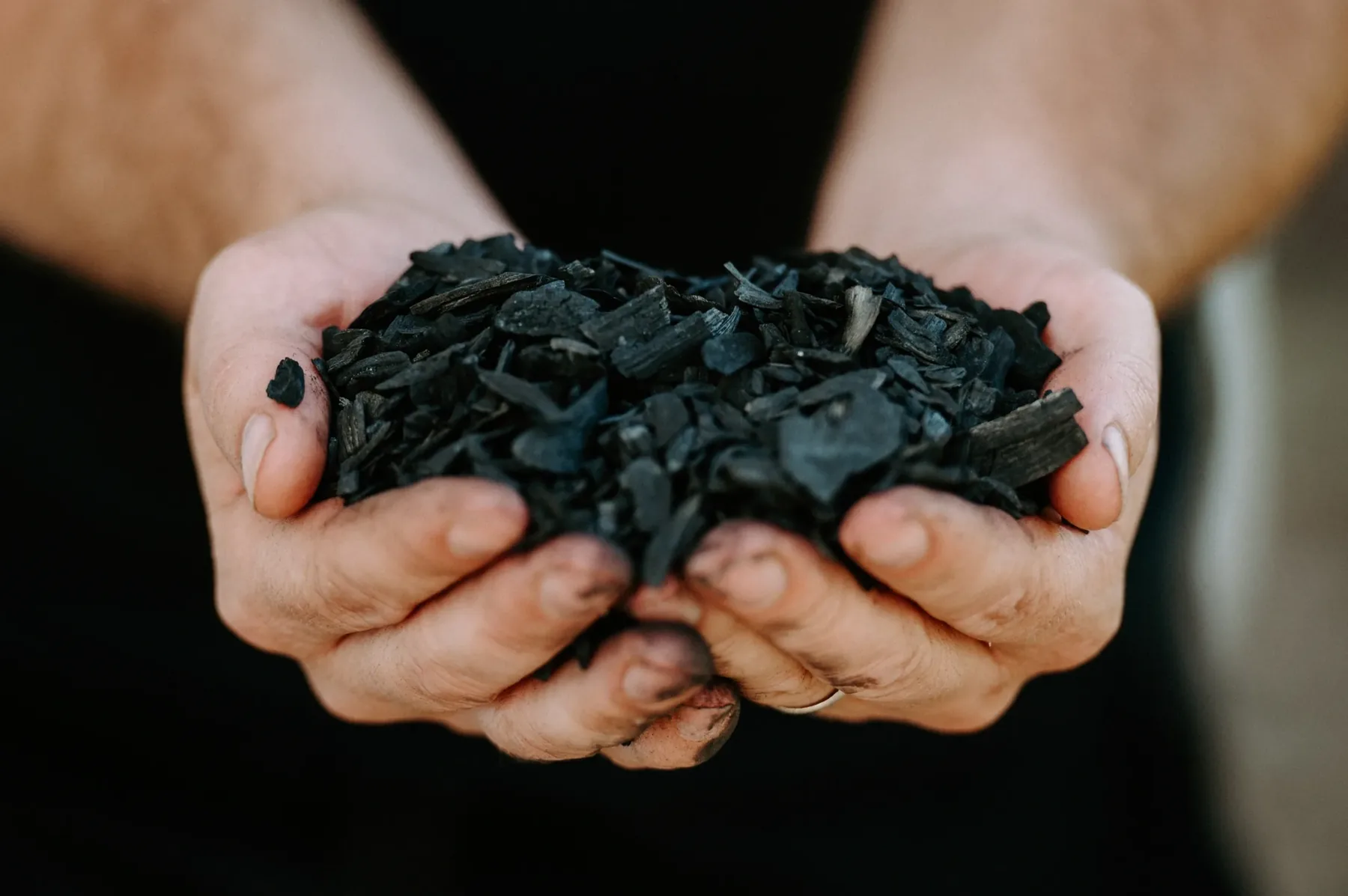
Biochar in hands
Maui BioCarbon — Circular Carbon for Maui Nui

Bulk Agricultural Biochar

Direct sales to farms, ranches, and agricultural operations for soil amendment, water retention, and crop productivity improvements across Maui.

Compost-Blended Biochar

Value-added blended products for retail, landscape, and agricultural markets. Higher-margin with broad commercial appeal and established distribution channels.

Environmental Media

Biochar for stormwater filtration, nutrient retention, erosion control, and environmental applications across Mauiʼs infrastructure.

Industrial Applications

Landfill daily cover, odor control, leachate management. Potential for direct offtake with Maui county waste management operations.

Landscaping & Soil Amendments

Retail and commercial products for resort properties, botanical gardens, residential markets, and Mauiʼs growing green infrastructure sector.

Carbon Removal Credits

When produced, characterized, and documented under recognized standards, biochar can support long-term carbon storage. Pursued where technically and economically defensible.

Intended Carbon Registry Pathways
Puro.earthCarbonfuture

Maui BioCarbon intends to pursue carbon removal credit certification through Puro.earth and/or Carbonfuture — two of the leading registries for biochar carbon removal. Credit qualification requires rigorous MRV of biochar production, characterization, and application. Carbon credit revenue is treated as upside and not included in base financial projections.

Note on Carbon Claims: Carbon removal pathways will be pursued where technically verifiable, economically sound, and consistent with recognized registry and MRV standards. No carbon credit revenue is assumed in base financial projections.
Detailed price assumptions, yield estimates, avoided-cost calculations, and carbon-credit assumptions are reserved for qualified project-review materials.
Transforming Mauiʼs waste challenge into a durable, carbon-rich resource for soil, land, and climate.
Target Annual Impact

Measurable Outcomes at Initial Scale

Target performance at initial operating scale. Final figures confirmed through engineering, feedstock modeling, and operational planning.

~11,000
Tons Biomass Processed / Year
At 30–35 TPD throughput
~3,000
Tons Biochar Produced / Year
Subject to feedstock and yield optimization
~8,000
Tons Landfill Diversion / Year
Estimated annual landfill offset
TBD
tCO₂e Stored / Year
Subject to MRV qualification and registry
10+
Direct Local Jobs
Operations, logistics, and sales
Multi-Sector
Local Customers Served
Farms, landscapers, resorts, composters
US Composting Council
The Maui BioCarbon team brings leadership experience with the US Composting Council and the Green Business Council — decades of on-the-ground waste conversion, composting, and organic resource management across Hawaiʻi and beyond.
Team

Why This Team Reduces Project Risk

Maui BioCarbon combines operating leadership, project finance experience, Maui-based execution history, regulatory discipline, cultural engagement, and biochar technical expertise.

Leadership Team
Harry Petersen
Harry Petersen
Managing Member & Operations Lead

30+ years in waste management and construction. Led Hawaiʻi projects for Waste Resource Technologies and Harp Renewables. Expertise in project implementation and waste conversion facility operations.

Local relationships and operational track record are foundational to feedstock supply and facility execution.
Dan Phillips
Dan Phillips
Project Development & Financing

20+ years as an energy-transition executive advancing renewable fuels, carbon-capture, and sustainable-infrastructure ventures globally. Experience includes Solazyme, Air Liquide, and low-carbon infrastructure development.

Experience navigating complex infrastructure finance and decarbonization markets positions the project to access institutional capital.
Rob Webber
Rob Webber
Strategy, Finance & Commercial Dev.

25+ years as CEO/CFO in renewable energy, bio-fuels, technology, and land development. Led Maui Land (NYSE: MLP), Waste Resource Tech., Harp and Aloha Waste — all Maui-based operations.

Public-company CFO experience and Maui-based project execution address the financial credibility lenders require.
Local Experts & Advisors
Mike Friedl
Mike Friedl
CFO & Regulatory Compliance

20+ years as public company CFO and private company CEO & CFO. CPA with manufacturing experience including ISO certification, permitting, tax, accounting, and regulatory compliance.

CPA background and permitting/regulatory experience directly address two of the most critical risk areas for project lenders.
Kimokeo Kapahulehua
Kimokeo Kapahulehua
Community & Cultural Engagement

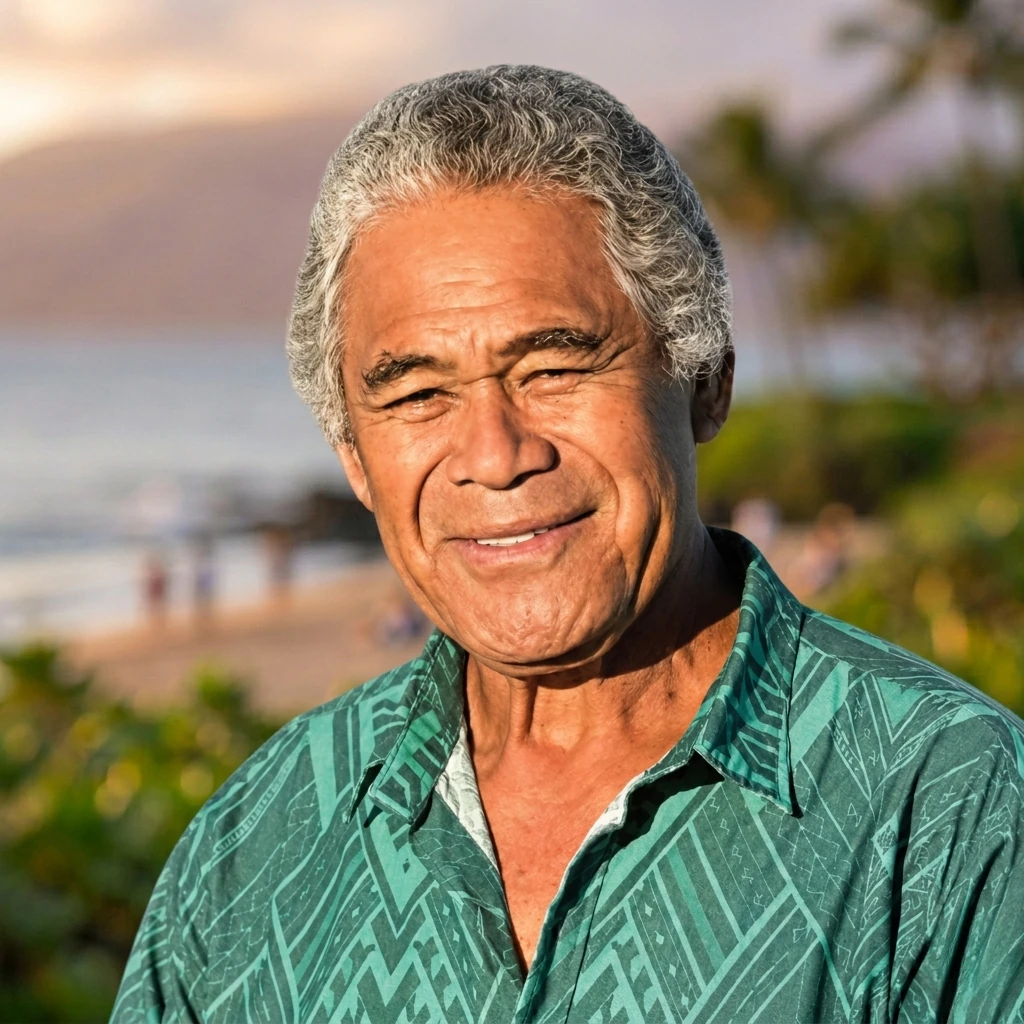
Hawaiian cultural practitioner and environmental advocate dedicated to preserving Mauiʼs ocean, land, and cultural heritage. Kimokeo leads community engagement for Maui BioCarbon, ensuring the project is rooted in Hawaiian values and community trust.

Community trust and cultural alignment are essential to local acceptance, stakeholder engagement, and long-term project legitimacy.
Tom Miles
Tom Miles
Biochar Technology Advisor

Founding member and executive director of the U.S. Biochar Initiative (2010–2024); Director, International Biochar Initiative (2015–2024). Global leader and expert in char pyrolysis production and technologies.

Deep biochar market and technology expertise helps validate equipment selection, product quality, and market development strategy.
Project Financing

A Financeable Local Infrastructure Project

Maui BioCarbon is structuring project financing, local partnerships, and mission-aligned capital around a commercial-scale biochar and bioconversion facility for Maui.

Project Snapshot

  • Location: Pulehunui Industrial Park, Maui, Hawaiʻi
  • Facility scale: 30–35 TPD biomass throughput
  • Technology: Commercially demonstrated rotary drum pyrolysis
  • Feedstock: Local woody biomass and green waste; supplier LOIs in place
  • Revenue: Biochar sales, tipping fees, energy recovery, carbon credits (upside)
  • Stage: Pre-construction — site, financing, engineering, permitting in process

Preliminary Capital Structure

  • Preliminary capital need: final project capitalization will be sized around the selected equipment package, site work, utility infrastructure, installation, commissioning, and working capital requirements — subject to final engineering, lender review, and project documentation
  • Target debt: SBA 504 project financing, HI-CAP working capital, USDA, state grants
  • Equity: Local and mission-aligned capital to anchor lender confidence
  • Use of funds: Pyrolysis equipment, site prep, utility infrastructure, installation, commissioning, feedstock handling, working capital

Revenue Model

  • Biochar product sales — primary revenue driver through bulk, blended, agricultural, landscaping, and environmental product channels
  • Feedstock diversion fees — potential intake revenue where Maui BioCarbon provides a lower-cost, higher-value alternative to disposal
  • Syngas energy recovery — operating cost offset and resilience benefit, subject to final system design and utility configuration
  • Compost-blended biochar — higher-margin value-add product line
  • Carbon removal credits — potential upside only where registry qualification, MRV requirements, and project economics support issuance

Risk Mitigation

  • Commercially demonstrated rotary drum pyrolysis — avoids first-of-kind equipment risk
  • Experienced local operating team with Hawaiʻi waste and biomass track record
  • Supplier and offtake LOIs in place with agricultural and resort partners
  • CPA/CFO with permitting, ISO, and regulatory compliance experience on team
  • Community and cultural engagement led by recognized Hawaiian practitioner
  • Modular design allows phased expansion as revenue and feedstock scale
Discuss the Project
Local Market Support & Validation

Local Support Across Feedstock and Offtake Channels

Maui BioCarbon is developing local relationships across agriculture, landscaping, resort operations, and land management to support both feedstock supply and biochar offtake.

Current relationship status: BrightView — LOI signed; Mahi Pono — expressed interest; Maui Gold Pineapple Co. — LOI signed; Fairmont Kea Lani — LOI signed; Mākena — LOI signed; Kapalua — discussions underway.
BrightView
Landscaping & Green Waste
BrightView

Interest in supplying green waste feedstock and purchasing biochar for landscaping applications across Maui resort properties.

LOI Signed
Mahi Pono
Agricultural Land
Mahi Pono

Expressed interest in diverting agricultural waste and incorporating biochar to improve soil moisture, nutrient cycling, and crop resilience across central Maui farmland.

Expressed Interest
Maui Gold Pineapple Co
Agricultural Biomass
Maui Gold Pineapple Co.

Interest in supplying pineapple agricultural byproducts for processing, providing consistent high-volume biomass feedstock from established Maui farming operations.

LOI Signed
Fairmont Kea Lani
Resort Sustainability
Fairmont Kea Lani

LOI signed for potential biochar use in soil-improvement, erosion control, and turf applications across resort operations.

LOI Signed
Mākena Golf & Beach Club
Resort & Golf
Mākena Golf & Beach Club

LOI signed for potential biochar use in soil-improvement, erosion control, and turf resilience across resort and golf course operations.

LOI Signed
Kapalua Resort
Resort & Land Management
Kapalua Resort

Interest in biochar for resort landscape soil-improvement, erosion control, and sustainable land management applications across the Kapalua property.

Discussions Underway

Partner names and status labels reflect current executed LOIs, expressed interest, and active discussions as represented by the project team. Formal supply and offtake agreements are subject to project financing, final negotiation, and definitive documentation.

Development Timeline

Path to Operations

Six phases from site control to initial biochar production and customer delivery.

Phase 1
Site Control
LOI and lease negotiations at Pulehunui Industrial Park
Phase 2
Engineering
Preliminary layout, equipment scope, and utility requirements
Phase 3
Financing
SBA 504, HI-CAP, private equity, and grant programs
Phase 4
Permitting
State, county, environmental, and operating approvals
Phase 5
Construction
Site prep, equipment installation, and commissioning
Phase 6
Initial Operations
Feedstock intake, biochar production, and customer delivery
Remaining Development Milestones
  • Final site agreement and lease execution
  • Final engineering and equipment scope
  • Utility confirmation and infrastructure
  • Feedstock supply agreements from LOIs
  • Offtake commitments formalized
  • Permitting — state, county, environmental
  • Financing close
  • Equipment procurement and delivery
  • Site construction and installation
  • Commissioning and ramp-up
Frequently Asked Questions

What Lenders, Reviewers & Partners Ask

Answers to the most common questions from financing sources, grant reviewers, community members, and commercial partners.

What is biochar?
Biochar is a stable, carbon-rich material produced by heating woody biomass in a low-oxygen environment (pyrolysis). When properly produced and applied, biochar can support soil health, water retention, nutrient management, and long-term carbon storage.
What feedstocks will Maui BioCarbon use?
Kiawe, black wattle, agricultural green waste, landscaping debris, and pineapple byproducts. Supplier LOIs are in place. Feedstock is expected to come from agricultural operations, landscaping, and invasive-species removal — not forestland conversion.
Is this incineration?
No. Pyrolysis heats biomass in the absence of oxygen — there is no combustion. The result is a stable carbon-rich material rather than ash. Emissions performance depends on system design, operating conditions, and emissions controls.
What products will the facility sell?
Bulk agricultural biochar, compost-blended amendments, environmental media, landscaping products, and potentially carbon removal credits subject to MRV qualification. Feedstock diversion fees may provide additional revenue from intake where commercially appropriate.
Who will buy the biochar?
LOIs are in place with BrightView, Mahi Pono, Maui Gold, Fairmont Kea Lani, Mākena, and Kapalua. Target customers include farms, resort landscaping, composting companies, county programs, botanical gardens, and environmental projects.
How does this reduce landfill burden?
By converting suitable woody biomass and green waste into biochar, the facility can create an additional productive local pathway for material that would otherwise require disposal, composting, mulching, or other handling routes. Commercial green-waste disposal on Maui currently carries meaningful tipping fees, making productive diversion economically relevant for some generators and haulers.
How does biochar help Mauiʼs reefs?
Biocharʼs high porosity and nutrient-retention properties can help soils retain water and nutrients when applied appropriately. As part of broader soil-management practices, this may reduce nutrient losses from leaching and runoff.
Can pyrolysis address certain contaminated organic materials?
High-temperature thermal treatment may have future applications for certain contaminated organic feedstocks, including biosolids. Maui BioCarbon’s initial project is focused on woody biomass, green waste, and agricultural residues; any PFAS-related application would require permitting, feedstock qualification, technology validation, emissions controls, and regulatory approval.
Which carbon registries will Maui BioCarbon use?
Maui BioCarbon intends to pursue certification through Puro.earth and/or Carbonfuture — two leading registries for biochar carbon removal. Both require rigorous MRV and third-party verification. Credit revenue is treated as upside, not in base projections.
Where will the facility be located?
Maui BioCarbon is pursuing a site at Pulehunui Industrial Park, a commercial and light-industrial zone in central Maui, well-positioned for biomass logistics and distribution across the island.
What permits are required?
State, county, environmental, and operating permits. The permitting pathway is under active development through regulatory consultation, engineering review, and project-specific operating requirements.
How can interested parties learn more?
Interested parties may contact Maui BioCarbon through the project inquiry form. This website is for informational purposes only and does not constitute an offer to sell securities or a solicitation of investment.
Get in Touch

Contact Maui BioCarbon

Whether you are a project finance contact, biochar customer, commercial partner, or local stakeholder — reach out through the project inquiry channel below.
Primary Contact
Harry Petersen, Managing Member
Location
Maui BioCarbon LLC  ·  Maui, Hawaiʻi